
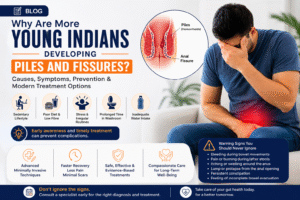
Gone are the days when piles and anal fissures were considered problems of older adults. Today, an increasing number of people in their 20s and 30s are visiting surgical clinics with complaints of pain during bowel movements, bleeding, and discomfort while sitting.
So, what is causing this alarming trend among young Indians?
Understanding the Difference
Piles (Hemorrhoids) are swollen veins in the rectum or anus that can cause bleeding, itching, or a lump around the anal area.
Anal Fissures are small tears in the lining of the anus that cause severe pain, especially during and after passing stools.
While both conditions affect the anal region, their symptoms and treatment approaches can differ.
Why Are Young Indians at Higher Risk Today?
- Sedentary Lifestyle
Long hours at desks, working from home, binge-watching, and reduced physical activity have become a part of modern life. Sitting for prolonged periods affects blood circulation in the pelvic area and increases the risk of developing piles.
- Poor Dietary Habits
Fast food, processed snacks, and low-fibre diets are contributing significantly to constipation, one of the biggest reasons behind piles and fissures. A diet lacking fruits, vegetables, and whole grains leads to hard stools and excessive straining.
- Inadequate Water Intake
Many young professionals consume multiple cups of coffee but drink very little water. Dehydration hardens the stools, making bowel movements painful and increasing the risk of anal fissures.
- Stress and Irregular Routines
Stress, late-night work schedules, and irregular meal timings can disrupt digestion and bowel habits. Chronic constipation and frequent episodes of loose stools can both contribute to anal problems.
- Excessive Time on Smartphones in the Washroom
Spending 15–20 minutes scrolling through social media while sitting on the toilet puts additional pressure on the veins around the anus, increasing the risk of piles.
- Ignoring Early Symptoms
Many young adults feel embarrassed discussing anal health issues and often self-medicate. Delaying treatment can worsen symptoms and lead to chronic problems.
Warning Signs You Should Never Ignore
- Bright red bleeding while passing stools
- Severe pain during or after bowel movements
- Itching or burning around the anus
- A lump or swelling near the anal opening
- Persistent constipation
- Feeling of incomplete bowel evacuation
Can These Conditions Be Prevented?
The good news is that most cases can be prevented through simple lifestyle changes:
✔ Eat a high-fibre diet rich in fruits and vegetables.
✔ Drink at least 2–3 litres of water daily.
✔ Exercise regularly and avoid prolonged sitting.
✔ Do not strain during bowel movements.
✔ Avoid spending excessive time on the toilet.
✔ Respond to the urge to pass stools without delay.
When Should You See a Doctor?
If you experience bleeding, severe pain, or symptoms that persist for more than a few days, do not ignore them. Early diagnosis can prevent complications and help avoid more invasive treatments.
Modern treatment options, including medications, minimally invasive procedures, and laser surgery, offer excellent outcomes with quicker recovery and minimal discomfort.
The Bottom Line
Piles and fissures are no longer diseases of old age. Our changing lifestyles, poor eating habits, and increasing stress levels are making these conditions common among younger Indians.
The good news is that timely medical attention and a few lifestyle modifications can make a significant difference. Remember, bleeding or pain during bowel movements is never normal and should not be ignored.
Taking care of your gut health today can save you from painful complications tomorrow.