
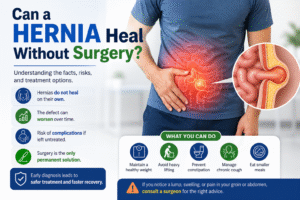
A hernia is a common medical condition that occurs when an internal organ or tissue pushes through a weak spot in the surrounding muscle or connective tissue. Many people diagnosed with a hernia often ask, “Can a hernia heal without surgery?”
The simple answer is no—hernias do not heal on their own. Unlike a muscle strain or minor injury, a hernia is a structural defect in the abdominal wall or surrounding tissues. Once the weakness develops, it usually remains and may gradually worsen over time.
Understanding when a hernia requires treatment and the risks of delaying surgery can help you make informed decisions about your health.
What Is a Hernia?
A hernia develops when an organ, usually part of the intestine or fatty tissue, protrudes through a weak area in the muscle wall.
Common types of hernias include:
- Inguinal Hernia (groin area)
- Umbilical Hernia (near the belly button)
- Incisional Hernia (at the site of a previous surgery)
- Femoral Hernia (upper thigh/groin region)
- Hiatal Hernia (upper stomach pushing through the diaphragm)
While some hernias may initially cause little discomfort, they rarely improve without medical intervention.
Why Can’t a Hernia Heal on Its Own?
A hernia occurs because of a physical defect or weakness in the muscle layer. Unfortunately, the body cannot naturally repair a large muscle defect once it has formed.
Think of it like a tear in a wall—simply resting does not close the opening. Similarly, medications, exercises, or lifestyle changes cannot permanently repair a hernia.
Without treatment:
- The opening may become larger.
- Symptoms may worsen.
- The risk of complications increases.
- Surgical repair may become more complex later.
Can Lifestyle Changes Help?
Although lifestyle modifications cannot cure a hernia, they may help reduce symptoms and slow progression.
Helpful measures include:
Maintaining a Healthy Weight
Excess weight increases pressure on the abdominal wall, making hernias more noticeable and uncomfortable.
Avoiding Heavy Lifting
Straining while lifting can worsen an existing hernia.
Preventing Constipation
Chronic straining during bowel movements can increase abdominal pressure.
Managing Chronic Cough
Persistent coughing places repeated stress on weakened muscles.
Eating Smaller Meals
Particularly beneficial for patients with hiatal hernias.
While these measures may provide temporary relief, they do not eliminate the hernia.
Can a Hernia Belt or Truss Cure a Hernia?
Some patients use a hernia belt or truss to support the affected area.
However, it is important to understand that:
- A hernia belt does not repair the defect.
- It only provides temporary support.
- Symptoms may return once the device is removed.
- Long-term use may delay necessary treatment.
A hernia belt should only be used under medical supervision.
What Happens If a Hernia Is Left Untreated?
Not every hernia requires immediate surgery, but untreated hernias often become larger and more symptomatic over time.
Potential complications include:
Incarcerated Hernia
The protruding tissue becomes trapped and cannot be pushed back inside.
Symptoms may include:
- Persistent swelling
- Pain
- Nausea
- Vomiting
Strangulated Hernia
This is a surgical emergency.
The blood supply to the trapped tissue becomes blocked, leading to tissue death.
Warning signs include:
- Severe pain
- Redness over the swelling
- Fever
- Vomiting
- Sudden worsening of symptoms
Without urgent treatment, a strangulated hernia can become life-threatening.
When Can Surgery Be Delayed?
In certain situations, your surgeon may recommend observation instead of immediate surgery, such as:
- Small hernias causing no symptoms
- Elderly patients with significant medical risks
- Patients with serious health conditions where surgery may be unsafe
Even in these cases, regular follow-up is important because the hernia can enlarge or become complicated over time.
Is Surgery the Only Permanent Solution?
Yes. Surgery is currently the only definitive treatment for a hernia.
The goal of surgery is to:
- Return the protruding tissue to its normal position
- Repair the muscle defect
- Strengthen the weakened area
- Prevent recurrence
Modern surgical techniques have made hernia repair safer and more effective than ever before.
Laparoscopic Hernia Surgery: A Modern Approach
Many hernias can now be repaired using minimally invasive laparoscopic surgery.
Benefits include:
- Smaller incisions
- Less postoperative pain
- Faster recovery
- Reduced hospital stay
- Earlier return to work
- Better cosmetic results
Most patients can resume routine activities within a few weeks, depending on the type of hernia and surgery performed.
Signs You Should See a Surgeon
Consult a surgeon if you notice:
- A lump or swelling in the groin or abdomen
- Pain while lifting, coughing, or exercising
- Increasing size of the swelling
- Discomfort during daily activities
- A hernia that cannot be pushed back in
Early evaluation often leads to simpler treatment and better outcomes.
Frequently Asked Questions (FAQs)
Can exercise cure a hernia?
No. Exercise cannot close the muscle defect causing a hernia. Certain exercises may even worsen the condition if performed incorrectly.
Can a small hernia disappear on its own?
No. Hernias generally do not disappear without surgical repair.
Is hernia surgery always necessary?
Most hernias eventually require surgery. However, some small, asymptomatic hernias can be monitored under a surgeon’s guidance.
What is the best treatment for a hernia?
Surgical repair remains the only permanent and effective treatment.
How long can I live with a hernia without surgery?
Some people live with a hernia for years, but delaying treatment increases the risk of enlargement and complications.
Conclusion
If you’re wondering, “Can a hernia heal without surgery?”, the answer is clear: a hernia cannot repair itself naturally. While lifestyle changes and supportive measures may help manage symptoms, they cannot fix the underlying muscle weakness.
Seeking timely medical evaluation can help prevent complications and allow for safer, less invasive treatment options. If you notice a persistent lump, swelling, or discomfort in your abdomen or groin, consulting an experienced general surgeon is the best way to protect your long-term health.
Dr. Manu Shankar specializes in the diagnosis and advanced laparoscopic treatment of hernias, helping patients return to their normal lives with minimal discomfort and faster recovery.