
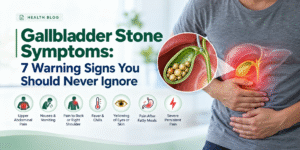
Gallbladder stones, also known as gallstones, are a common digestive health condition that can remain unnoticed for years. Many people discover they have gallstones during an ultrasound performed for an unrelated medical concern. However, in some individuals, gallstones can cause significant abdominal pain, nausea, digestive discomfort, and potentially serious complications.
One of the biggest challenges is that early gallbladder stone symptoms are often confused with acidity, gas, indigestion, or other stomach-related problems. As a result, some patients delay seeking medical advice until the symptoms become severe.
Gallstones do not always require treatment. However, when they obstruct the normal flow of bile or cause inflammation, timely medical evaluation becomes important.
Understanding the warning signs, possible complications, and available treatment options can help you make informed decisions about your health.
In this article, we explain seven important symptoms of gallbladder stones, when they may indicate a medical emergency, and how conditions involving the gallbladder are diagnosed and treated.
What Are Gallbladder Stones?
The gallbladder is a small, pear-shaped organ located beneath the liver on the right side of the upper abdomen. Its primary function is to store and concentrate bile, a digestive fluid produced by the liver that helps the body digest fats.
Gallstones are hardened deposits that form inside the gallbladder when substances present in bile become imbalanced.
There are two major types of gallstones:
- Cholesterol stones: Usually yellow-green in colour, these are the most common type of gallstones. They develop when bile contains more cholesterol than can remain dissolved.
- Pigment stones: Usually dark brown or black, these stones form primarily from bilirubin and may be associated with certain blood disorders, liver conditions, or infections.
Gallstones may vary considerably in size, ranging from tiny particles resembling grains of sand to stones several centimetres in diameter.
Some individuals develop a single gallstone, while others may have multiple stones.
Importantly, not everyone with gallstones experiences symptoms. Stones that do not cause symptoms are referred to as asymptomatic or silent gallstones and often do not require surgery.
7 Warning Signs of Gallbladder Stones
Recognising the symptoms of gallstones is important because some indicate temporary obstruction, while others may suggest inflammation, infection, or blockage of the bile ducts.
- Sudden Pain in the Upper Right Abdomen
One of the most characteristic symptoms of gallstones is sudden pain in the upper right portion of the abdomen, just below the rib cage.
This pain is commonly called biliary colic, although it often feels steady rather than cramping.
It typically occurs when a gallstone temporarily blocks the cystic duct, preventing bile from leaving the gallbladder normally.
Common characteristics include:
- Pain that develops suddenly and increases in intensity.
- Discomfort in the upper right or central upper abdomen.
- Pain lasting approximately 30 minutes to several hours.
- Episodes that may occur after meals or during the night.
- Pain severe enough to interrupt normal activities.
Unlike ordinary gas or mild indigestion, gallstone-related pain is often persistent during an attack and may not improve after passing gas, changing position, or using the toilet.
When should you be concerned?
If upper abdominal pain is severe, persists for several hours, or is accompanied by fever, vomiting, or jaundice, urgent medical evaluation is necessary.
- Pain After Eating Fatty or Heavy Meals
Some people with symptomatic gallstones notice abdominal pain after consuming rich or fatty foods.
When you eat, particularly a meal containing fat, the digestive system releases a hormone called cholecystokinin. This stimulates the gallbladder to contract and release bile into the small intestine.
If a gallstone obstructs the outlet of the gallbladder, this contraction may trigger pain.
Symptoms may occur after meals containing:
- Fried or oily foods.
- Butter, cream, or high-fat dairy products.
- Rich gravies and heavy meals.
- Fast food and other high-fat preparations.
However, gallstone attacks are not always associated with fatty meals. They may also occur after ordinary meals or without an obvious dietary trigger.
Can dietary changes prevent gallstone pain?
Reducing high-fat meals may help some individuals avoid triggering symptoms, but dietary modification does not reliably remove existing gallstones or eliminate the possibility of complications.
People experiencing repeated attacks should consult a qualified medical professional rather than relying on dietary changes alone.
- Pain That Spreads to the Back or Right Shoulder
Gallbladder-related pain is not always limited to the abdomen.
Some patients experience discomfort that radiates towards the right shoulder blade, the upper back, or the area between the shoulder blades.
This happens because pain signals originating from the gallbladder can be perceived in other areas through shared nerve pathways, a phenomenon known as referred pain.
The discomfort may:
- Begin in the upper abdomen and spread towards the back.
- Be felt beneath the right shoulder blade.
- Occur together with nausea or abdominal pain.
- Persist throughout a gallstone attack.
This symptom is sometimes mistaken for muscular pain, poor posture, or spinal discomfort.
However, shoulder or back pain alone is not sufficient to diagnose gallstones.
Important: Chest pain, particularly when associated with sweating, breathlessness, or discomfort extending into the arm or jaw, requires emergency assessment because it may indicate a heart-related condition.
- Nausea and Vomiting During Pain Episodes
Nausea and vomiting can accompany symptomatic gallstones, especially during episodes of biliary colic or acute gallbladder inflammation.
These symptoms may develop because obstruction and inflammation affect normal gallbladder function and trigger the body’s response to visceral pain.
Patients may experience:
- Nausea accompanying upper abdominal pain.
- One or more episodes of vomiting.
- Reduced appetite during an attack.
- Difficulty tolerating food because of ongoing discomfort.
Nausea and vomiting are common symptoms of many gastrointestinal conditions, including food poisoning, gastritis, and viral infections.
Therefore, their presence does not automatically indicate gallstones.
However, when vomiting occurs alongside characteristic upper right abdominal pain, gallbladder disease becomes one of the conditions that should be considered.
Persistent vomiting, particularly when a person cannot retain fluids, requires prompt medical attention because dehydration and other complications may develop.
- Fever and Chills Along With Abdominal Pain
Fever is not a typical feature of uncomplicated biliary colic.
When fever or chills develop alongside upper abdominal pain, they may indicate an inflammatory or infectious complication.
One such condition is acute cholecystitis, which occurs when a gallstone obstructs the cystic duct and causes inflammation of the gallbladder.
Patients with acute cholecystitis may experience:
- Persistent upper right abdominal pain.
- Fever.
- Nausea or vomiting.
- Tenderness over the gallbladder.
- Pain that worsens with deep breathing during examination.
Another serious complication is acute cholangitis, an infection of the bile ducts that may occur when a stone obstructs the common bile duct.
Cholangitis can become life-threatening if not treated promptly.
When is it an emergency?
Fever or shaking chills associated with upper abdominal pain, particularly when accompanied by jaundice, should be treated as a medical emergency.
Hospital-based assessment, blood tests, imaging, antibiotics, and sometimes urgent procedures may be required.
- Yellowing of the Eyes or Skin (Jaundice)
Jaundice is an important warning sign that may indicate obstruction of the bile drainage system.
Normally, bile produced by the liver travels through the bile ducts into the intestine.
Sometimes, a gallstone moves out of the gallbladder and becomes lodged in the common bile duct. This condition is called choledocholithiasis.
When bile cannot drain normally, bilirubin may accumulate in the bloodstream, causing yellow discolouration of the eyes and skin.
Other associated symptoms may include:
- Dark-coloured urine.
- Pale or clay-coloured stools.
- Itching.
- Upper abdominal pain.
- Nausea or vomiting.
Jaundice can also occur because of liver diseases and other conditions unrelated to gallstones.
Therefore, further investigation is essential to determine the cause.
Do not ignore jaundice. New yellowing of the eyes or skin requires prompt medical evaluation. If jaundice occurs with fever, chills, severe pain, or confusion, emergency care is necessary.
- Severe Upper Abdominal Pain That Does Not Settle
Occasionally, gallstones can cause complications beyond the gallbladder itself.
One particularly important complication is gallstone pancreatitis, which occurs when a stone obstructs the drainage pathway shared by the bile duct and pancreatic duct.
This can trigger inflammation of the pancreas.
Symptoms may include:
- Sudden, severe pain in the upper abdomen.
- Pain that extends through to the back.
- Persistent nausea and vomiting.
- Abdominal tenderness.
- A feeling of significant illness.
Unlike a typical episode of biliary colic, pain associated with pancreatitis is often prolonged and may require hospital admission.
Acute pancreatitis ranges from mild inflammation to severe illness involving organ complications.
Severe or persistent abdominal pain should never be dismissed as ordinary acidity without appropriate medical assessment.
Can Gallstones Cause Gas, Bloating and Acidity?
Many patients search online for answers to questions such as “Can gallbladder stones cause gas?” or “Are gallstones responsible for acidity?”
The relationship is not always straightforward.
People with gallstones may also experience bloating, belching, fullness, or indigestion. However, these symptoms are extremely common and are not specific to gallbladder disease.
They may occur because of acid reflux, functional dyspepsia, irritable bowel syndrome, food intolerance, or other digestive conditions.
Importantly, finding gallstones on an ultrasound does not necessarily mean they are responsible for every digestive symptom.
Gallstone-related pain typically has a more recognisable pattern, involving episodes of steady upper abdominal pain that may radiate to the back or right shoulder.
A medical evaluation helps distinguish symptomatic gallstones from other digestive disorders and prevents unnecessary treatment.
Who Is More Likely to Develop Gallbladder Stones?
Gallstones can develop in people of different ages and backgrounds, but certain factors increase the likelihood.
These include:
- Age: Gallstones become more common with increasing age.
- Female sex: Hormonal influences contribute to a higher risk in women.
- Pregnancy: Hormonal changes can affect gallbladder emptying and bile composition.
- Obesity: Excess body weight is associated with increased cholesterol secretion into bile.
- Rapid weight loss: Losing weight very quickly can increase the risk of gallstone formation.
- Family history: Genetic factors may contribute to gallstone development.
- Diabetes and metabolic conditions: These may be associated with increased risk.
- Certain blood disorders: Conditions involving increased breakdown of red blood cells can contribute to pigment stones.
Although risk factors can help identify people who may be more susceptible, gallstones can also develop in individuals without obvious risk factors.
How Are Gallbladder Stones Diagnosed?
If a person experiences symptoms suggestive of gallstones, a doctor generally begins with a detailed medical history and physical examination.
The aim is to understand the location, duration, severity, and pattern of pain while assessing for complications.
Abdominal Ultrasound
An abdominal ultrasound is usually the first-line imaging investigation for suspected gallbladder stones.
It is non-invasive, does not use ionising radiation, and can help identify:
- Gallstones within the gallbladder.
- Thickening of the gallbladder wall.
- Fluid surrounding the gallbladder.
- Enlargement of the bile ducts.
- Other findings that may suggest gallbladder inflammation.
Blood Tests
Depending on the symptoms, a doctor may recommend:
- Complete blood count to assess for signs of infection or inflammation.
- Liver function tests, including bilirubin.
- Pancreatic enzymes such as lipase when pancreatitis is suspected.
- Additional tests based on the clinical condition.
MRCP, EUS and Other Investigations
If a stone is suspected in the common bile duct, additional imaging such as magnetic resonance cholangiopancreatography (MRCP) or endoscopic ultrasound (EUS) may be recommended.
In selected cases, endoscopic retrograde cholangiopancreatography (ERCP) is used to remove stones from the bile duct.
ERCP is generally reserved for situations where therapeutic intervention is required rather than being used routinely to diagnose uncomplicated gallbladder stones.
Do All Gallbladder Stones Require Surgery?
No. The presence of gallstones does not automatically mean that surgery is necessary.
Management depends on symptoms, complications, medical history, and individual risk factors.
Asymptomatic Gallstones
When gallstones are discovered incidentally and do not cause symptoms, observation without surgery is usually appropriate.
Preventive surgery may be considered in certain selected high-risk situations, but it is not routinely recommended for everyone.
Symptomatic Gallstones
When gallstones cause characteristic recurrent biliary pain, laparoscopic gallbladder removal is generally the definitive treatment offered to suitable patients.
The decision should follow clinical evaluation and discussion of the potential benefits, risks, and alternatives.
Complicated Gallstone Disease
Conditions such as acute cholecystitis, bile duct obstruction, cholangitis, or gallstone pancreatitis require more urgent assessment.
Treatment may involve hospital admission, supportive care, antibiotics when indicated, endoscopic procedures, and surgery.
The appropriate sequence and timing depend on the severity of the condition.
Laparoscopic Gallbladder Surgery: What Should Patients Know?
Laparoscopic cholecystectomy is a commonly performed operation for symptomatic gallstones.
During this procedure, the surgeon removes the gallbladder through several small abdominal incisions using a camera and specialised surgical instruments.
6
Compared with traditional open surgery, laparoscopic surgery often offers:
- Smaller incisions.
- Less postoperative pain in many patients.
- Shorter hospital stays.
- Earlier return to routine activities.
- Smaller surgical scars.
However, recovery and outcomes vary depending on the patient’s health, inflammation, anatomy, and surgical complexity.
Occasionally, conversion to open surgery is necessary for safety.
Like any operation, laparoscopic cholecystectomy carries risks, including bleeding, infection, bile leakage, bile duct injury, and complications related to anaesthesia.
These risks should be discussed with the treating surgeon before the procedure.
Can Gallstones Be Removed Without Removing the Gallbladder?
This is a frequently asked question among patients exploring gallbladder stone treatment in Faridabad and elsewhere.
For most patients undergoing surgery for symptomatic gallstones, the standard procedure involves removing the gallbladder rather than extracting only the stones.
This is because stones may form again if the gallbladder remains in place.
Certain medications, such as ursodeoxycholic acid, may dissolve selected small cholesterol stones in specific circumstances. However, treatment may take months or longer, stones can recur, and medication is not suitable for most patients with symptomatic gallstone disease.
There is no reliable evidence that commonly promoted home remedies or gallbladder cleanses can safely eliminate gallstones.
Patients should avoid delaying appropriate medical care in favour of unproven remedies.
What Happens If Gallbladder Stones Are Left Untreated?
The outcome depends largely on whether the stones are causing symptoms.
Many people with silent gallstones remain symptom-free and never develop complications.
However, symptomatic gallstones may lead to recurrent painful episodes or, in some cases, serious conditions such as:
- Acute cholecystitis.
- Common bile duct stones.
- Obstructive jaundice.
- Acute cholangitis.
- Gallstone pancreatitis.
Not every patient with symptomatic gallstones will develop these complications, but repeated episodes should prompt discussion with a qualified surgeon.
Early evaluation allows patients to understand their individual risk and available treatment options.
When Should You Consult a Laparoscopic Surgeon in Faridabad?
If you experience repeated upper abdominal pain, particularly episodes associated with nausea or pain radiating to the back, it is advisable to seek medical assessment.
A consultation with a general or laparoscopic surgeon may be appropriate when gallstones have been confirmed and are causing characteristic symptoms.
For individuals exploring gallbladder stone surgery in Faridabad, understanding the diagnosis and treatment options is more important than making a decision based solely on an ultrasound report.
Dr Manu Shankar, a General and Laparoscopic Surgeon in Faridabad, can be consulted for evaluation of symptomatic gallstones and discussion of surgical management where clinically indicated.
The choice of treatment should always be based on the patient’s symptoms, investigation findings, overall health, and informed preferences.
Frequently Asked Questions About Gallbladder Stones
- What is the first symptom of gallbladder stones?
Many gallstones cause no symptoms. When symptoms develop, a common presentation is steady pain in the upper right or central upper abdomen, sometimes occurring after a meal.
- Can gallbladder stones cause pain on the left side?
Typical gallstone pain occurs in the upper right or central abdomen. Left-sided pain is less characteristic and may indicate another condition. Medical evaluation is necessary to determine the cause.
- Can gallbladder stones disappear naturally?
Some small stones may pass into the intestine, but this can also cause dangerous bile duct obstruction or pancreatitis. Most gallstones do not reliably disappear on their own, and there is no proven home remedy to remove them safely.
- Is a 10 mm gallbladder stone dangerous?
Stone size alone does not determine whether treatment is necessary. A 10 mm stone may remain asymptomatic, while smaller stones can sometimes migrate into the bile duct and cause complications. Symptoms and clinical findings are more important than size alone.
- Can I live normally without a gallbladder?
Yes. Most people can live normally after gallbladder removal because the liver continues to produce bile. Some individuals experience temporary changes in bowel habits or difficulty tolerating fatty foods, while a smaller proportion develop persistent digestive symptoms.
- How long does recovery take after laparoscopic gallbladder surgery?
Many patients return home the same day or after an overnight stay, depending on their condition. Light daily activities may resume within a few days, while return to work often takes approximately one to two weeks. Recovery can be longer following complicated surgery or physically demanding work.
- What is the best treatment for symptomatic gallbladder stones?
For most medically suitable patients with symptomatic gallstones, laparoscopic cholecystectomy is the standard definitive treatment. However, the appropriate approach depends on symptoms, complications, and individual medical circumstances.
Conclusion
Gallbladder stones are common, but their symptoms should not be ignored when they cause recurrent or severe pain.
While many individuals live without problems from silent gallstones, others may experience repeated abdominal pain, nausea, inflammation, or complications involving the bile ducts and pancreas.
Recognising warning signs such as persistent upper abdominal pain, fever, jaundice, or severe vomiting can help ensure timely medical attention.
If you have been diagnosed with gallstones or are experiencing recurring symptoms, consult a qualified healthcare professional for an accurate diagnosis and personalised treatment advice.
Early evaluation can help identify complications and determine whether observation, further investigation, or surgery is appropriate.