
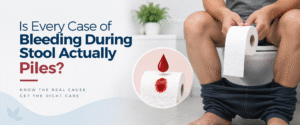
Have you noticed blood while passing stool and immediately assumed it was piles? You may be right—but not every case of rectal bleeding is caused by piles.
Bright red blood on toilet paper or in the toilet bowl is commonly associated with haemorrhoids (piles). However, anal fissures and several other conditions can also cause bleeding. That is why repeated or unexplained bleeding should not simply be self-diagnosed as piles.
Is bleeding during stool always caused by piles?
No.
Piles are one of the common causes of bleeding during bowel movements, particularly when the blood is bright red and appears on toilet paper, on the outside of the stool or in the toilet bowl.
But rectal bleeding can have several possible causes. An anal fissure, for example, can cause bright red bleeding along with pain during or after passing stool.
Other intestinal or colorectal conditions can also cause blood in the stool.
The important point is simple: seeing blood does not tell you the cause by itself.
What does piles-related bleeding usually look like?
Bleeding from internal haemorrhoids is often painless and may appear as bright red blood during or after passing stool.
You may also notice other symptoms such as itching, a feeling of swelling or a lump around the anus, or tissue coming out during bowel movements.
However, symptoms can overlap with other conditions, which is why persistent bleeding deserves medical assessment.
Could a fissure cause bleeding instead of piles?
Yes.
An anal fissure is a small tear in the lining of the anus. It commonly causes pain during or after passing stool, particularly after constipation or passing a hard stool. Bright red blood may also be present.
So if you have bleeding accompanied by significant pain while passing stool, it should not automatically be labelled as piles.
Can constipation cause bleeding?
Constipation and straining can contribute to haemorrhoids and anal fissures.
Repeatedly straining during bowel movements and spending a long time on the toilet can aggravate symptoms. Increasing dietary fibre, drinking adequate fluids and avoiding excessive straining can help reduce symptoms in many people with haemorrhoids.
However, these measures should not be used as a reason to ignore persistent bleeding.
When should you see a doctor for bleeding during stool?
You should consult a doctor if:
- Bleeding keeps coming back.
- You are unsure about its cause.
- The amount of blood is increasing.
- You have significant pain.
- You notice a change in your bowel habits.
- You have unexplained weight loss or persistent abdominal symptoms.
- The stool appears very dark or black.
- Bleeding continues even after treatment for presumed piles.
A surgeon can assess your symptoms and determine whether the bleeding is likely to be from piles, a fissure or another condition.
Is blood in the stool ever a sign of something more serious?
Yes, which is why persistent rectal bleeding should not automatically be attributed to piles.
Most people with rectal bleeding will not have a serious underlying disease, but conditions affecting the colon and rectum can also cause bleeding.
Current colorectal guidance specifically advises that rectal bleeding should not automatically be attributed to haemorrhoids. Further evaluation may be appropriate when there is no obvious anorectal source, when bleeding persists, or when other symptoms are present.
Does every case of piles require surgery?
No.
Treatment depends on the type and severity of haemorrhoids.
Many people improve with dietary and lifestyle measures, particularly when constipation and straining are addressed. Depending on the condition, non-surgical procedures may also be considered.
Surgery is generally reserved for selected cases where symptoms are significant or other treatments have not provided adequate relief.
What should you do if you see blood while passing stool?
The first step is not to panic—but also not to assume it is piles.
If it happens once and is a very small amount, it may not indicate a serious problem. But if bleeding is recurrent, unexplained or accompanied by other symptoms, getting an appropriate examination is the safer approach.
The bottom line
Is every case of bleeding during stool actually piles? No.
Piles are a common cause of rectal bleeding, but they are not the only cause. Understanding the reason for bleeding is important, particularly when the symptom keeps returning.
If you are experiencing recurrent bleeding while passing stool, a consultation with a qualified surgeon can help establish the cause and determine whether you need treatment or further evaluation.
Frequently Asked Questions
Is bright red blood after stool always piles?
No. Piles are a common cause, but anal fissures and other conditions can also cause bright red rectal bleeding.
Can constipation cause blood in stool?
Constipation and straining can contribute to piles and anal fissures, both of which may cause bleeding.
When should I see a doctor for blood in stool?
You should seek medical advice if bleeding is recurrent, unexplained, increasing, or accompanied by pain, changes in bowel habits, weight loss or other concerning symptoms.
Can piles go away without surgery?
Many cases can improve with lifestyle measures and non-surgical treatment. The appropriate approach depends on the type and severity of haemorrhoids.
Should I ignore occasional blood on toilet paper?
It is better not to repeatedly self-diagnose rectal bleeding. If it recurs or you are concerned, consult a doctor for an appropriate assessment.