
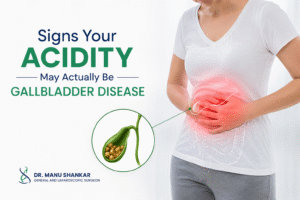
Most people assume that frequent acidity, bloating, or indigestion is caused by spicy food, stress, or irregular eating habits. While this may be true in many cases, persistent digestive discomfort can sometimes point toward a more serious underlying condition — gallbladder disease.
Many patients ignore early gallbladder symptoms because they closely resemble common acidity or gastric problems. Unfortunately, delaying diagnosis can lead to severe pain, infection, or emergency surgery later.
According to Dr. Manu Shankar, recognizing the warning signs early can help patients seek timely treatment and avoid complications.
What Does the Gallbladder Do?
The gallbladder is a small organ located beneath the liver. Its main function is to store bile, a digestive fluid that helps break down fats in the food you eat.
When gallstones form or the gallbladder becomes inflamed, bile flow gets disrupted. This can trigger symptoms that often feel very similar to acidity or indigestion.
Signs Your “Acidity” Could Actually Be Gallbladder Disease
- Pain After Eating Oily or Heavy Food
One of the most common signs of gallbladder disease is pain that starts after eating fried, oily, or fatty meals.
Unlike regular acidity, this pain may:
- Occur in the upper right side of the abdomen
- Spread to the back or right shoulder
- Last for 30 minutes to several hours
If this pattern repeats frequently, gallstones may be the reason.
- Bloating With Upper Abdominal Pain
Many people experience bloating occasionally. However, persistent bloating associated with:
- heaviness in the stomach,
- upper abdominal discomfort,
- nausea,
- or pressure below the ribs
could indicate gallbladder inflammation rather than simple gastric acidity.
- Acidity Medicines Are Not Helping
If you are regularly taking antacids or acidity medications but your symptoms keep returning, it is important not to ignore it.
Gallbladder disease symptoms are often mistaken for:
- acid reflux,
- gastritis,
- indigestion,
- or gas problems.
When medications provide only temporary relief, further evaluation may be needed.
- Pain That Travels to the Back or Shoulder
Typical acidity usually causes burning in the chest or stomach. Gallbladder pain, however, may radiate toward:
- the back,
- right shoulder,
- or shoulder blade area.
This is a classic symptom many patients overlook.
- Nausea After Meals
Feeling nauseous after eating, especially after fatty foods, can also signal gallbladder dysfunction.
Some patients may additionally experience:
- vomiting,
- burping,
- excessive gas,
- or loss of appetite.
- Sudden Severe Stomach Pain
Gallstones can suddenly block the bile duct and trigger intense pain known as a gallbladder attack.
This pain may:
- start suddenly,
- become unbearable,
- disturb sleep,
- or require emergency hospitalization.
Ignoring repeated “acidity attacks” can sometimes become dangerous.
Who Is More at Risk?
Gallbladder disease is becoming increasingly common due to modern lifestyle habits.
Risk factors include:
- obesity,
- sedentary lifestyle,
- fatty diet,
- rapid weight loss,
- diabetes,
- pregnancy,
- family history,
- and age above 40.
However, younger adults are also increasingly being diagnosed with gallstones today.
How Is Gallbladder Disease Diagnosed?
Diagnosis usually includes:
- physical examination,
- ultrasound scan,
- blood tests,
- and evaluation of symptoms.
An ultrasound is commonly used to detect gallstones or gallbladder inflammation.
Treatment for Gallbladder Disease
Treatment depends on symptom severity and the condition of the gallbladder.
Mild Cases
Some mild cases may initially be managed with:
- dietary changes,
- medications,
- and observation.
Symptomatic Gallstones
When gallstones repeatedly cause pain or complications, surgery is often recommended.
The most common treatment is:
Laparoscopic Gallbladder Surgery
Laparoscopic surgery is a minimally invasive procedure performed using small incisions and a camera.
Benefits include:
- less pain,
- faster recovery,
- smaller scars,
- shorter hospital stay,
- and quicker return to daily activities.
According to Dr. Manu Shankar, timely laparoscopic treatment can prevent serious complications such as infection, pancreatitis, or bile duct blockage.
When Should You See a Doctor?
Consult a specialist if you experience:
- repeated acidity after meals,
- pain in the upper abdomen,
- nausea with fatty foods,
- pain radiating to the back,
- or sudden severe stomach pain.
Early diagnosis can help avoid emergency situations.
Conclusion
Not every acidity problem is simply due to gas or indigestion. Persistent digestive symptoms, especially after oily meals, may actually indicate gallbladder disease.
Ignoring these warning signs can delay treatment and increase the risk of complications. If your acidity keeps returning despite medications, it may be time for a proper medical evaluation.
Dr. Manu Shankar specializes in advanced laparoscopic procedures and treatment of gallbladder disorders, helping patients recover safely with modern minimally invasive techniques.
FAQs
Can gallbladder pain feel like acidity?
Yes. Gallbladder disease commonly causes symptoms such as bloating, indigestion, nausea, and upper abdominal discomfort that can resemble acidity.
How do I know if it is acidity or gallstones?
Pain after fatty meals, pain radiating to the back, nausea, and repeated symptoms despite acidity medicines may suggest gallstones.
Is gallbladder surgery safe?
Yes. Laparoscopic gallbladder surgery is considered a safe and commonly performed minimally invasive procedure.
Can gallstones go away without surgery?
Small asymptomatic gallstones may not require immediate surgery, but symptomatic gallstones usually need treatment to prevent complications.
What foods should be avoided in gallbladder disease?
Fatty, oily, fried, and heavy meals should generally be avoided as they can trigger symptoms.