
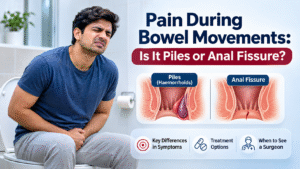
Pain while passing stool is an uncomfortable problem that many people hesitate to discuss. Some experience a sharp, cutting sensation during bowel movements. Others notice burning, itching, swelling, or a few drops of blood on the toilet paper.
Most people assume these symptoms are caused by piles. However, pain during bowel movements can also be a sign of an anal fissure, a condition that requires a different treatment approach.
Although piles and anal fissures affect the same part of the body and share certain symptoms, they are not the same condition. Understanding the difference can help you recognise warning signs, avoid inappropriate self-medication, and seek treatment at the right time.
Why Does It Hurt When You Pass Stool?
Pain during bowel movements can occur when the tissues around the anus become swollen, irritated, injured, or inflamed.
Two common causes are piles (haemorrhoids) and anal fissures. Constipation, hard stools, excessive straining, and prolonged sitting on the toilet can contribute to these problems.
However, not every episode of anal pain is caused by piles or fissures. Infections, abscesses, and other anorectal conditions can produce similar symptoms.
The location, intensity, and duration of pain often provide important clues, but a physical examination may be needed for an accurate diagnosis.
What Are Piles (Haemorrhoids)?
Piles are swollen blood vessels in or around the anus and lower rectum. They can develop internally or externally.
Internal piles develop inside the rectum and often cause painless bleeding during bowel movements. Some may protrude outside the anus, causing discomfort.
External piles develop beneath the skin around the anus and may cause itching, swelling, tenderness, or pain. If a blood clot forms inside an external haemorrhoid, the pain can become sudden and severe.
Common symptoms of piles include:
- Bright red blood after passing stool
- Itching or irritation around the anus
- A lump or swelling near the anal opening
- Discomfort while sitting
- Tissue protruding during bowel movements
Importantly, internal piles do not always cause pain. In fact, painless rectal bleeding is one of their characteristic symptoms.
What Is an Anal Fissure?
An anal fissure is a small tear in the delicate lining of the anal canal. It commonly develops when hard or large stools stretch and injure the tissue during bowel movements.
Unlike uncomplicated internal piles, anal fissures frequently cause intense pain.
Patients often describe the sensation as a sharp cut or tearing feeling while passing stool, followed by burning that can continue for several minutes or even hours.
Common symptoms include:
- Sharp, cutting pain during bowel movements
- Burning sensation after passing stool
- Small amounts of bright red blood on toilet paper
- Pain that continues after leaving the toilet
- Fear of passing stool because of anticipated pain
Some chronic fissures may also be associated with a small skin tag near the anus.
Anal fissures can become persistent when pain causes the anal sphincter muscle to tighten, reducing blood flow and interfering with healing.
FASCRS+1
Piles vs Anal Fissure: How Can You Tell the Difference?
Although the symptoms overlap, certain patterns may help distinguish the two conditions.
| Symptom | Piles | Anal fissure |
| Pain while passing stool | Variable; internal piles often painless | Usually sharp or cutting |
| Bleeding | Bright red, sometimes painless | Usually small amounts of bright red blood |
| Burning after stool | Possible | Common; may last hours |
| Itching | Common | Possible |
| Lump near anus | Common with external or prolapsed piles | Sometimes a small skin tag |
| Main problem | Swollen haemorrhoidal tissue | Tear in the anal lining |
These differences are helpful but cannot confirm a diagnosis. Both conditions may occur together, and other diseases can cause similar symptoms.
Five Signs Your Pain May Be Due to an Anal Fissure
- You feel a sharp cut while passing stool. A tearing or knife-like sensation is particularly suggestive of an anal fissure.
- The pain continues after the bowel movement. Fissure-related pain can persist long after passing stool because of muscle spasm.
- You notice a few streaks of fresh blood. Small amounts of bright red blood may appear on the stool or toilet paper.
- You are afraid to use the toilet. Repeated painful experiences can cause people to delay bowel movements, worsening constipation.
- The pain returns whenever you pass hard stool. Repeated stretching of the injured tissue may reopen the tear and delay healing.
These signs should prompt medical assessment, especially when symptoms persist or recur.
What Causes Piles and Anal Fissures?
Both conditions are associated with bowel habits that place excessive pressure on the anal region.
Common contributing factors include chronic constipation, straining, low dietary fibre intake, and prolonged sitting on the toilet.
Frequent diarrhoea may also contribute to irritation and fissure formation.
Pregnancy and childbirth can increase the likelihood of developing haemorrhoids, while anal fissures may occur after passing hard stools or following repeated irritation.
People with sedentary routines may be more prone to constipation, although sitting at a desk alone does not establish a diagnosis of piles.
Can Piles and Anal Fissures Heal Without Surgery?
Yes. Many patients improve with appropriate non-surgical treatment, especially when the condition is identified early.
Treatment for piles
Mild haemorrhoids can often be managed through dietary changes, better bowel habits, and medication.
Depending on the symptoms and severity, treatment may include fibre supplements, stool softeners, warm sitz baths, or short-term topical medication.
When internal piles cause persistent bleeding or protrusion, procedures such as rubber band ligation or other specialist treatments may be recommended.
Surgery is generally considered for selected patients with large, recurrent, severely symptomatic, or complicated haemorrhoids.
Treatment for anal fissures
Many recent anal fissures heal with measures that soften stools and reduce irritation.
Treatment may involve warm sitz baths, adequate fibre and fluid intake, stool softeners, and prescribed ointments that relax the anal sphincter muscle.
Persistent fissures may require additional treatments, including botulinum toxin injections or surgery.
One surgical option is lateral internal sphincterotomy, which reduces muscle tension to help the fissure heal. Because this procedure carries a risk of changes in bowel control, the decision requires careful assessment and discussion with a surgeon.
FASCRS+1
When Should You See a General Surgeon?
Many people delay consultation because they feel embarrassed or believe the symptoms will disappear.
However, recurring pain or bleeding should not be ignored.
Consult a doctor if you experience persistent pain while passing stool, repeated bleeding, a painful lump, or symptoms that fail to improve with initial care.
Seek urgent medical attention if you develop severe anal pain with fever, significant bleeding, dizziness, or worsening abdominal symptoms.
Not all rectal bleeding is caused by piles. Other conditions, including inflammatory bowel disease and colorectal cancer, may sometimes present with bleeding. A doctor may recommend further evaluation based on your age, symptoms, examination, and medical history.
How Does a Doctor Diagnose Piles or Anal Fissure?
Diagnosis usually begins with a discussion about your symptoms, bowel habits, bleeding, and the duration of pain.
The doctor may then examine the area around the anus to look for swelling, haemorrhoids, or a visible fissure.
A digital rectal examination or anoscopy may be recommended when appropriate. However, if a fissure causes severe pain, an internal examination may be deferred until discomfort improves.
In selected patients, additional investigations such as colonoscopy may be needed to evaluate unexplained rectal bleeding or other concerning symptoms.
Accurate diagnosis is important because treatment for a fissure differs from treatment for haemorrhoids.
How Can You Prevent Pain During Bowel Movements?
Healthy bowel habits can reduce the likelihood of constipation and help prevent recurrence of both conditions.
- Eat fibre-rich foods: Include fruits, vegetables, whole grains, and pulses in your daily meals.
- Drink adequate fluids: Good hydration helps support softer stools.
- Avoid straining: Do not force bowel movements or spend unnecessary time on the toilet.
- Stay physically active: Regular movement supports normal bowel function.
- Do not delay bowel movements: Ignoring the urge can make stools harder to pass.
- Avoid repeated self-medication: Persistent symptoms need a proper diagnosis.
Frequently Asked Questions
- Why do I experience sharp pain while passing stool?
Sharp pain may be caused by an anal fissure, especially when accompanied by a burning sensation afterward. However, painful external haemorrhoids and other conditions can cause similar symptoms.
- Can piles cause severe pain?
Yes. Although uncomplicated internal piles are generally painless, external haemorrhoids containing a blood clot or severely prolapsed haemorrhoids can cause significant pain.
- Why does my anus burn for hours after passing stool?
Persistent burning after a bowel movement is commonly associated with anal fissures. Muscle spasm and irritation of the tear may prolong discomfort.
- Can I have both piles and an anal fissure?
Yes. Both conditions can occur together, particularly in people with constipation and repeated straining.
- Is bleeding during bowel movements always a sign of piles?
No. Bleeding can occur with fissures, haemorrhoids, inflammatory bowel disease, and other conditions. It should be evaluated rather than automatically attributed to piles.
- How long does an anal fissure take to heal?
Many acute fissures improve within a few weeks with appropriate treatment. Persistent or chronic fissures may require prescription medication or a procedure.
- Do all patients with piles need surgery?
No. Many cases respond to lifestyle changes and non-surgical treatment. Surgery is reserved for selected cases depending on severity, symptoms, and response to other treatments.
- Which doctor should I consult for pain during bowel movements?
A general surgeon with experience treating anorectal conditions or a colorectal surgeon can evaluate symptoms, identify the cause, and recommend appropriate treatment.
Final Thoughts
Pain during bowel movements should never become something you simply learn to live with.
While piles and anal fissures are common and often treatable, they require different approaches. Sharp pain that continues after passing stool may suggest an anal fissure, while painless bleeding or protruding tissue may be associated with internal piles.
Recognising these differences can help you seek timely medical advice, but self-diagnosis is not a substitute for examination.
If you experience recurring pain, bleeding, or discomfort while passing stool, consult a qualified surgeon for an accurate diagnosis and personalised treatment.
About Dr Manu Shankar
Dr Manu Shankar is Director – Minimal Invasive & General Surgery at Marengo Asia Hospital, Faridabad. Patients experiencing symptoms related to piles, anal fissures, hernias, gallbladder conditions, or other general surgical concerns can seek specialist evaluation to understand their diagnosis and available treatment options.